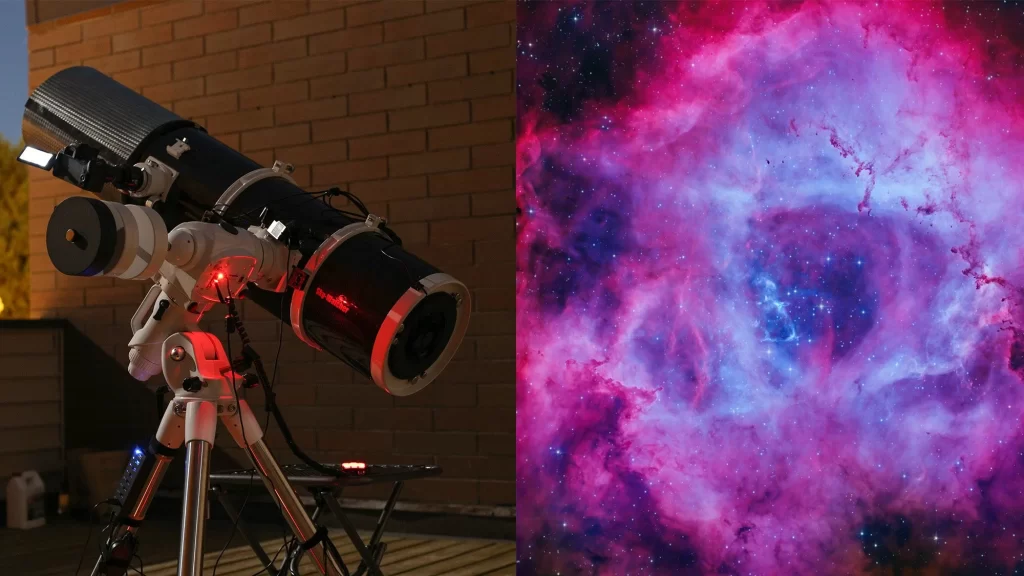
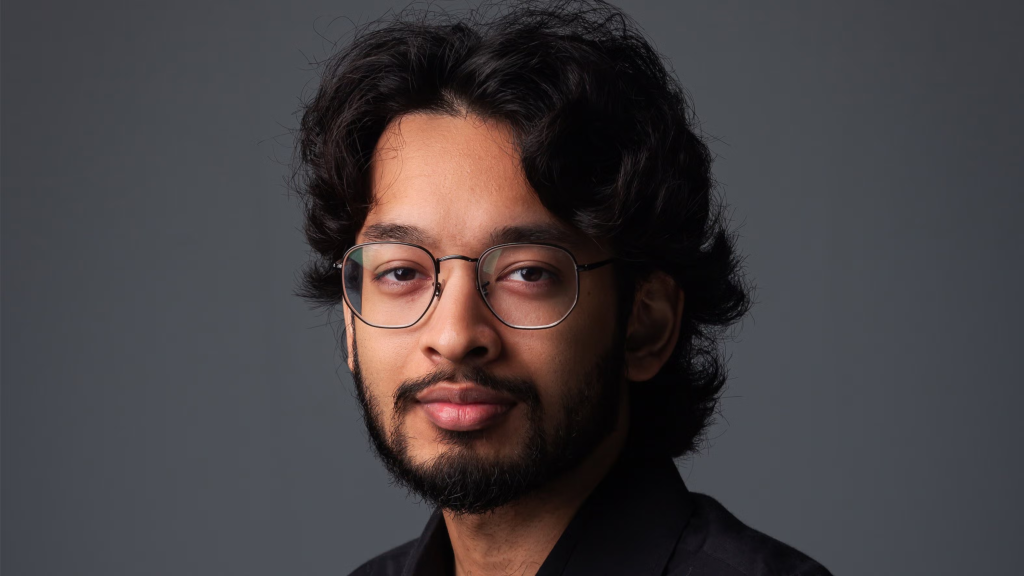
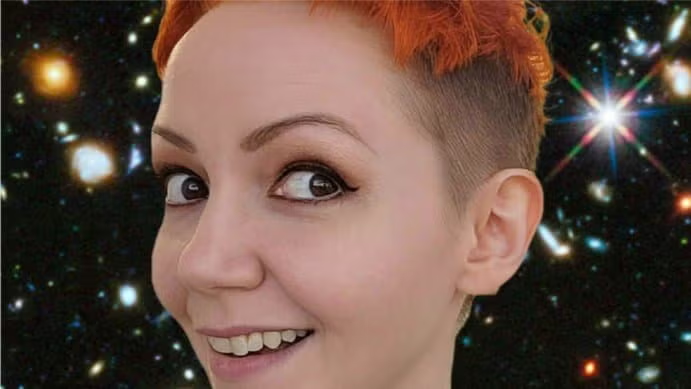
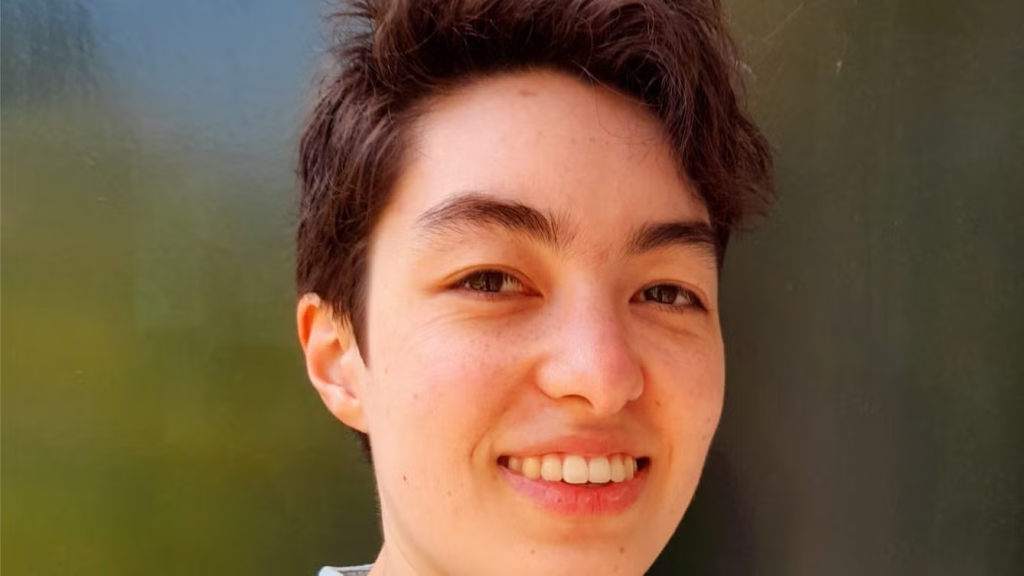
Abstract: Astrophotography is often seen as complex or unreachable, but this talk from Darsh Mittal invites you to experience the night sky not as a distant scientific wonder, but as an accessible canvas available from your own backyard, balcony, or local park. Through simple tools, thoughtful techniques, and a bit of patience, the universe reveals itself in surprising ways. Whether you want to capture the milky way, star trails, the moon, or just understand how to begin observing the sky more intentionally, this session will help you explore the cosmos as it is.
Bio: Darsh Mittal is a visual artist with a masters in digital media from SFU. His work explores how technology and visual storytelling can bring the cosmos closer to us.
Topic: RASC Vancouver’s Show and Tell-escope & Beginner’s Guide to Starhopping
Speaker: Robert Conrad (President RASC Vancouver)
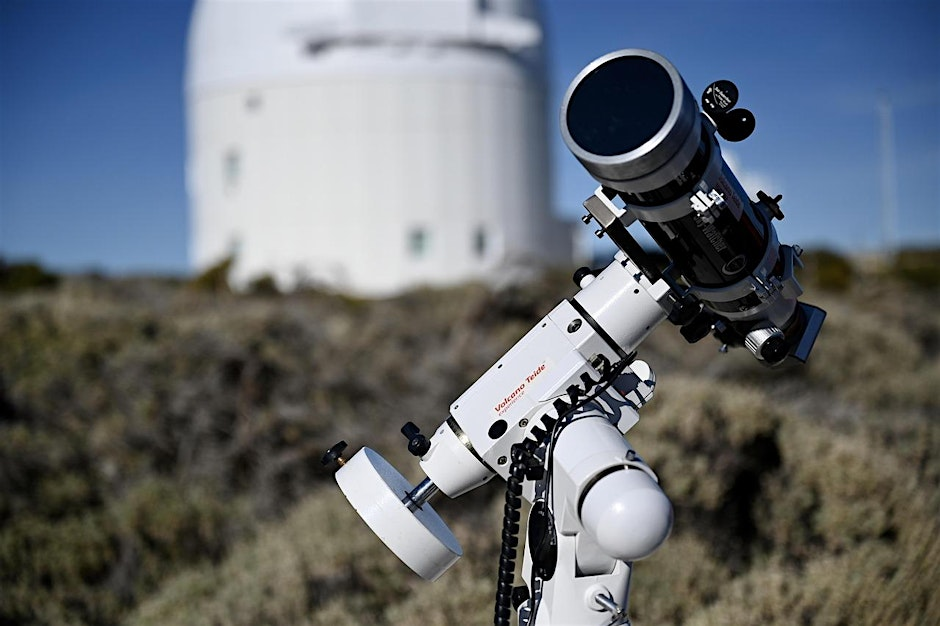
Abstract: Come and learn all about telescopes; the main ones you might have heard of, some you may not have, how they work, and how to take care of them. A number of our volunteers and council members will be on-site in the lobby of the H.R. MacMillan Space Centre later in the evening, standing at the ready beside their telescopes, ready to answer your questions and chat about the stars. Having a telescope is one thing, but knowing how to use it and your own biological set of peepers in conjunction to view the night sky is another. Prior to the Show and Tell-escope, please join us at 7:00pm in the H.R. MacMillan Space Centre Auditorium on the Lower Level for an approximately 90 minute lecture on how to navigate the night sky by eye, a process some call starhopping. At the end of the evening, you should have a basic idea of how to locate and navigate yourself amongst some of the stars, as well as know enough to begin thinking about using, renting, or purchasing your own telescope.
Bio: Robert Conrad is currently the President, Observing Director and Education Co-director of the Royal Astronomical Society of Canada (@ Vancouver). He has taught two courses at SFU through their continuing education program and offers frequent online courses and workshops on Observational Astronomy. His area of focus is teaching the art and science behind starhopping, a method used to locate celestial objects and how to locate comets and asteroids. Outside of astronomy he is an avid wildlife and mountain photographer as well as a learning and development and educational consultant.
Location: Simon Fraser University Burnaby Room AQ3149
Topic: Cosmic Rewind: Celebrating the Last Five Years
Speaker: Jennie “Starstuff” King
Bio: Jennie “Starstuff” King is a graduate of the University of Virginia’s astronomy program. While studying astronomy and physics, she discovered her deep love of science education through work with elementary school students. As a high school AP Physics and Engineering teacher in Colorado, she brought her love of space exploration to the classroom. Jennie became a NASA Solar System Ambassador in order to encourage others to explore the wonders of the cosmos with their hearts, minds, and (especially!) imaginations. In addition to volunteering with NASA, Jennie now works as the Manager of Educator Programs at Science World in Vancouver. She also has a feline co-pilot named Kepler.
Abstract: A great deal of public discussion around space exploration centres on what the future may hold. However, by constantly speculating about what comes next, we may miss opportunities to celebrate the plethora of recent achievements and discoveries in space science. Let’s spend some time reflecting on the amazing accomplishments in space exploration over the past five years, including popular hits as well as some less heard cosmic deep cuts. These past five orbits around the sun have taught us so much about the universe and about what we as humans can achieve when we work together, even during uncertain times. We’ll wrap up by exploring the very near past, as Jennie shares some photos and learnings from her recent trip to NASA’s Jet Propulsion Laboratory and Mount Wilson Observatory.
Location: H.R. MacMillan Space Centre Auditorium (Basement Level) **Please be aware the monthly meeting this month will not be at SFU**
Topic: Bringing the Night Sky to Life: The Vera Rubin Observatory
Speaker: Brett Gladman (in-person)
Bio: Professor Brett Gladman’s astronomical career has been heavily involved with studying moving objects in the Solar System. Having worked in the United States, France, and Canada, he has used many of the world’s best telescopes. He is currently a professor of astronomy at the University of British Columbia.
Abstract: Historically, astronomers have explored to Solar System and more distant universe in two ways. The first is to peer at a tiny fraction of the night sky where some object of interest is, but then what is happening elsewhere remains undetected. Alternately, a very large fraction (or all) of the night sky is ‘surveyed’, but due to the vast area of the sky, there are only a few different times a given location is observed; this results in an inability to see how things might be changing in time. A major leap forward is about to occur in astronomy with the start of the ‘Legacy Survey of Space and Time’ (LSST) that is about to begin using the newly constructed Vera Rubin telescope in Chile. This large (8-meter class) telescope has the goal of imaging the ENTIRE visible night sky (from Chile) during a 3-day interval and then repeating over and over again.This will essentially generate a ‘movie in time’ of the night sky with a 3-day cadence to much fainter depths than have been ever been possible. I will discuss some of the scientific goals that will be made possible by this unique facility.
Location: Simon Fraser University Burnaby Room AQ3159
Topic: Cosmic Rewind: Celebrating the Last Five Years
Speaker: Jennie King
Bio: Jennie “Starstuff” King is a graduate of the University of Virginia’s astronomy program. While studying astronomy and physics, she discovered her deep love of science education through work with elementary school students. As a high school AP Physics and Engineering teacher in Colorado, she brought her love of space exploration to the classroom. Jennie became a NASA-JPL Solar System Ambassador in order to encourage others to explore the wonders of the cosmos with their hearts, minds and imaginations. In addition to volunteering with NASA, Jennie now works as the Manager of Educator Programs at Science World in Vancouver, a role which allows her to continue sparking scientific curiosity and a love of STEAM learning.
Abstract: A great deal of public discussion around space exploration centers on what the future may hold. However, by constantly speculating about what comes next, we may miss opportunities to celebrate the plethora of recent achievements and discoveries in space science. Let’s spend some time reflecting on the amazing accomplishments in space exploration over the past five years, including popular hits as well as some less heard cosmic deep cuts. These past five orbits around the sun have taught us so much about the universe and about what we as humans can achieve when we work together, even during uncertain times.
Location: Simon Fraser University, Burnaby Mountain Campus: AQ, Room 3181 Topic: How I Found 3000 New Exoplanets Speaker: Dr. Michelle Kunimoto
Bio: Michelle Kunimoto is an assistant professor in the Department of Physics and Astronomy at UBC, where she also obtained her PhD. She was previously a postdoctoral fellow at MIT where she worked on NASA’s Transiting Exoplanet Survey Satellite (TESS) mission. Dr. Kunimoto is an expert on discovering and characterizing strange new worlds outside of the Solar System, known as exoplanets. She aims to understand the demographics and diversity of exoplanets, especially those that are potentially habitable and Earth-like. Across all of her planet-hunting endeavours, Dr. Kunimoto has found over 3400 planets and planet candidates.
Abstract: From the early days of exoplanet discovery to the revolutionary understanding of thousands of planets today, the field of exoplanet science has evolved at an astonishing pace. In this talk, I will share my experience searching for potentially habitable planets with NASA’s Kepler mission and discovering thousands of planets with NASA’s TESS mission, highlighting the challenges and thrills of analyzing massive datasets to find new worlds. As the field has progressed, the focus has shifted to understanding the atmospheres of exoplanets and rethinking what makes a planet habitable. Exoplanet science provides the opportunity to start answering the age-old question: Are we alone?
About our Events: All RASC lectures and observing events are open to the public, family friendly, and there is no charge for admission. Our organization is run entirely by volunteers who love astronomy and astrophysics. Whether you’re a complete beginner, a seasoned astronomer, or you hope to work for NASA some day, anyone fascinated by space exploration is welcome and will enjoy our events
Location: Simon Fraser University Burnaby Room AQ3149
Topic: Forecasting Exoplanet Weather with the James Webb Space Telescope
Speaker: Louis-Philippe Coulombe
Bio: Louis-Philippe is a PhD candidate at the Université de Montréal and a member of the Trottier Institute for Research on Exoplanets. His research uses JWST observations to study the composition and dynamics of exoplanet atmospheres.
Abstract: Some exoplanets orbit so close to their host stars that they are scorched by intense heat, leading to extreme weather patterns unlike anything seen in our Solar System. One such planet is LTT 9779 b, an “ultrahot Neptune” that reflects an unusually large amount of starlight, making it one of the most reflective planets ever found around another star. Using the James Webb Space Telescope, we observed the planet throughout its entire orbit, which lasts only 19 hours. Our observations reveal that the planet’s dayside is split into two distinct regions: the western side is covered in bright, reflective clouds, while the eastern side is much darker. This suggests that powerful winds push heat from the dayside towards the cooler nightside, allowing clouds made of minerals to form on one side while the other remains too hot for them to exist. These findings provide a rare glimpse into the exotic weather of distant worlds and help us understand how planetary atmospheres behave under extreme conditions.
Topic: RASC Vancouver’s Show and Tell-escope & Beginner’s Guide to Starhopping
Speaker: Robert Conrad (President RASC Vancouver)
Bio: Robert Conrad is currently the President, Observing Director and Education Co-director of the Royal Astronomical Society of Canada (@ Vancouver). He has taught two courses at SFU through their continuing education program and offers frequent online courses and workshops on Observational Astronomy. His area of focus is teaching the art and science behind starhopping, a method used to locate celestial objects and how to locate comets and asteroids. Outside of astronomy he is an avid wildlife and mountain photographer as well as a learning and development and educational consultant.
Abstract: It’s a great privilege to be working with the H.R. MacMillan Space Centre after a number of years away, and what better way to kick things off than with our Show and Tell-escope! Come and learn all about telescopes; the main ones you might have heard of, some you may not have, how they work, and how to take care of them. A number of our volunteers and council members will be on-site in the lobby of the H.R. MacMillan Space Centre throughout the evening, standing at the ready beside their telescopes, ready to answer your questions and chat about the stars. Having a telescope is one thing, but knowing how to use it and your own biological set of peepers in conjunction to view the night sky is another. Prior to the Show and Tell-escope, please join us at 7:00pm in the H.R. MacMillan Space Centre Auditorium on the Lower Level for an approximately 60 minute lecture on how to navigate the night sky by eye, a process some call starhopping. At the end of the evening, you should have a basic idea of how to locate and navigate yourself amongst some of the stars, as well as know enough to begin thinking about using, renting, or purchasing your own telescope.
If you so choose, you can also purchase a ticket to the 8:30pm Planetarium Show “The Universe”. The H.R. MacMillan Space Centre has graciously offered a 20% discount on admission to folks who come out! Use code RASCMEM online or at the front-desk to receive your discount.
Location: Simon Fraser University Burnaby Room AQ3149
Topic: Observational Basics Masterclass
Speaker: Robert Conrad (President RASC Vancouver)
Bio: Robert Conrad is currently the President, Observing Director and Education Co-director of the Royal Astronomical Society of Canada (@ Vancouver). He has taught two courses at SFU through their continuing education program and offers frequent online courses and workshops on Observational Astronomy. His area of focus is teaching the art and science behind starhopping, a method used to locate celestial objects and how to locate comets and asteroids. Outside of astronomy he is an avid wildlife and mountain photographer as well as a learning and development and educational consultant.
Abstract: In this interactive session (using a Socratic method of inquiry), Robert will provide a toolkit of resources that will enhance your observational and astrophotography pursuits if you are experienced and if you’re a beginner it will save you years of trial and error and thrust you at a level beyond most amateur astronomers. Get the most out of this event by attending in person (also since the total lunar eclipse will take place after the meeting if it’s mostly clear). Prepare some questions since this won’t be your typical one-way lecture!
Location: Simon Fraser University Burnaby Room AQ3149
Topic: Can Active Galactic Nuclei Be Used as Standard Candles to Measure Cosmology?
Speaker: Alan Chan
Bio: Alan Chan is an astronomer and a Bachelor of Science student in Astronomy and Astrophysics at the Australian National University (ANU), specialising in advanced physics. He works as an Astronomer and Educational Outreach Assistant at the Mount Stromlo Observatory and serves as the President of the ANU Astronomy Society. Alan is also a student of experimental physics at the ANU Centre for Gravitational Astrophysics, where his research focuses on precision measurement techniques for gravitational wave astronomy.
Alan’s research interests encompass a broad range of topics in cosmology and astrophysics, including observational cosmology, multi-messenger astronomy, Active Galactic Nuclei (AGNs), supernovae, black holes, dark energy, galaxy formation, and gravitational wave astronomy. Passionate about science communication, Alan regularly presents at public nights and conferences, making complex astronomical concepts accessible and engaging for all.
Abstract: The quest to understand the universe’s expansion and its underlying mechanisms, such as dark energy, has driven astronomers to seek reliable standard candles for measuring cosmological distances in high-redshift environments. While Type Ia supernovae (SNe Ia) have traditionally served this purpose, recent research suggests that Active Galactic Nuclei (AGNs) may also play a crucial role as standard candles. This talk explores the potential of AGNs in cosmological measurements, examining their unique properties, such as luminosity and variability, that could enable precise distance calculations. By investigating AGNs as standard candles, we aim to uncover new pathways in measuring cosmological parameters and refining our cosmic models. Following the five-year report from the Dark Energy Survey (DES) and the Australian Dark Energy Survey(OzDES), we will also discuss why the dark energy equations of state might need some revisions.